How Weather Affects Golden Hour Light — and When to Go Anyway
Clear skies are not the best sky for golden hour. Learn how clouds, haze, humidity, and seasons change golden hour light — and when to shoot even in bad weather.
Clear skies are not the best sky for golden hour. Learn how clouds, haze, humidity, and seasons change golden hour light — and when to shoot even in bad weather.
Why Clear Skies Aren't Always Best
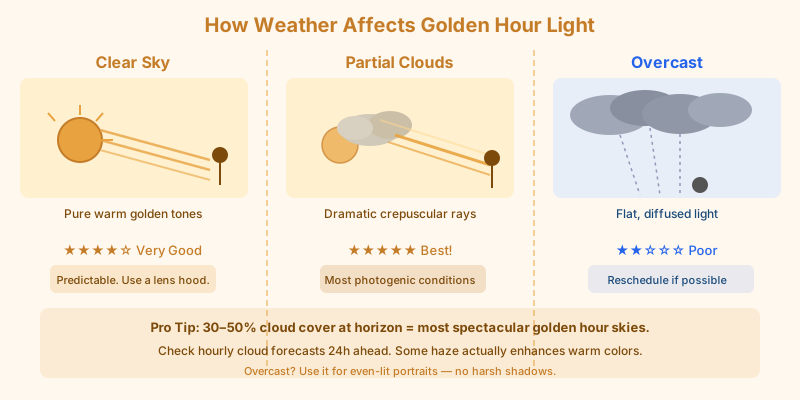
Most photographers assume that a clear forecast means a good golden hour. It often does — but a completely cloudless blue sky at sunset produces golden light without drama. There's nothing to bounce and scatter the light, no color gradations in the sky, and the warm tones tend to fade quickly once the sun dips below the horizon.
Partial cloud cover, on the other hand, can produce extraordinary golden hour conditions. The key is understanding what type of clouds are present and where they sit relative to the horizon.
Before planning any session, calculate your golden hour times so you know exactly when the light window opens. Then check the cloud cover forecast for that window.
Cloud Types and What They Do to Golden Hour Light
High-altitude clouds (cirrus, cirrostratus). These thin, wispy clouds sit at 20,000–40,000 feet. They don't block direct sun but act as a diffuser, softening the light and spreading warm tones across more of the sky. Cirrus clouds at golden hour are often the difference between a plain warm sky and a dramatic, multi-color one. Check for these the morning of a planned afternoon shoot — they're visible early and indicate what the evening sky might produce.
Mid-level clouds (altocumulus, altostratus). At 6,500–20,000 feet, these are the most variable. Broken altocumulus (the puffy, wave-like formations) create the most dramatic golden hour skies because warm light passes through the gaps and illuminates the underside of each cloud individually. A 30–50% broken altocumulus cover at golden hour is often optimal. Dense altostratus cover blocks most direct light and shortens the effective golden hour considerably.
Low-level clouds (stratus, cumulus). These are the problem clouds. A solid stratus deck at 1,000–3,000 feet blocks direct sunlight almost entirely, turning golden hour into a gray, flat twilight. However, if there's a gap in the stratus along the horizon — even a 5° strip of clear sky — the setting sun can shoot beneath the cloud deck and produce an intense, unexpected burst of warm light. This "window" phenomenon is unpredictable but worth staying for.
Fog and low-hanging mist. These technically block golden hour light, but they add atmospheric depth that's often more valuable than the light itself. Morning golden hour through coastal fog or valley mist creates ethereal landscape conditions. The light scatters through the mist and produces warm, soft, diffused effects. The complete golden hour guide covers mist in more detail.
The 70% Rule
A practical threshold that many photographers use: if cloud cover is under 70%, proceed with the shoot. If it's over 70%, check for the horizon gap described above before deciding to cancel.
At under 70%, you'll almost always get usable golden hour light, even if the sky isn't dramatic. Above 70%, it's a judgment call based on what's on the horizon.
Haze, Smoke, and Humidity
Atmospheric particles affect golden hour in ways distinct from clouds. They're present even on "clear" days and they can significantly change the quality of light.
Haze from humidity and pollution. Urban areas in summer often have significant haze from heat and atmospheric particulates. This haze is actually favorable for golden hour. It scatters short-wavelength blue light, extending the warm-tone effect. Los Angeles's notorious haze produces some of the most intensely warm golden hours in the US. Houston, Dallas, and Atlanta all benefit from similar conditions on hot summer days.
Wildfire smoke. When smoke from wildfires drifts into a region, it creates an orange filter effect that dramatically intensifies warm tones at golden hour. In the western US in late summer and fall, moderate smoke cover (visibility still 10+ miles) can produce deep red-orange sunsets unlike anything achievable under normal conditions. Heavy smoke (visibility under 5 miles) blocks too much light and tends to produce dull, red-tinged but low-contrast results.
Marine layer (coastal fog). Common on the US West Coast, the marine layer typically burns off during the day and returns at night. If it rolls back in before sunset, it can clip the end of the golden hour window. If it stays offshore, it often adds atmospheric softness to coastal scenes.
Rain and Golden Hour
Rain itself blocks golden hour completely. But the period immediately after rain stops — especially if the rain clears before sunset — can produce spectacular conditions:
- Wet surfaces (roads, pavement, leaves) reflect sky color and multiply the visual warmth of golden hour light
- The air is washed clean of particulates, increasing contrast and clarity
- Rain clouds often break from the west first, meaning the sun clears the horizon just in time for a golden hour burst before clouds move back in
When rain is forecast to clear in the afternoon before sunset, consider staying on location. The 15–30 minutes of clearing before full sunset can produce the best golden hour conditions of the month.
Seasonal Weather Patterns by City
Each calculator city has general seasonal patterns worth knowing.
New York and Boston: Spring and fall offer the most dramatic golden hour skies, with moving frontal systems producing dynamic cloud formations. Summer has high humidity and haze. Winter is clearer but colder, with lower sun angles that extend golden quality.
Los Angeles: June through August brings the marine layer and some haze. September through November offers the best conditions — clear air, Santa Ana winds, and lower sun angles. The "fire weather" periods in fall can produce dramatic orange skies from smoke.
Seattle: June through September is the dry season with frequent clear or lightly hazy days. October through May has high cloud cover that often blocks direct sun but occasionally produces dramatic breaks.
Miami: Year-round warmth and humidity. Afternoon thunderstorms in summer clear by early evening and often produce dramatic post-storm golden hour light. Hurricane season (June–November) brings more cloud variability.
Denver: High altitude means cleaner air and bluer skies generally. Afternoon thunderstorms from May through August clear by early evening, leaving spectacular skies. Wildfire smoke from the Western US drifts in from late summer through fall.
When to Reschedule vs. When to Stay
Cancel if: solid stratus or nimbostratus covers the entire sky with no horizon gaps visible by 30 minutes before sunset. You'll get flat, gray light with nothing to work with.
Stay if: cloud cover is mixed, broken, or if there's any indication of a horizon gap. You've already done the work of getting to the location — give the light 15 minutes to develop before packing up.
Calculate the precise golden hour timing and combine it with a cloud cover forecast from a weather app to make the call. The window is fixed; the weather is the variable.