Sunrise vs Sunset for Photography: Which Is Better?
The light quality is similar, but sunrise and sunset photography differ in crowd levels, air quality, sky color, and how long the window lasts. Here's a practical comparison.
The light quality is similar, but sunrise and sunset photography differ in crowd levels, air quality, sky color, and how long the window lasts. Here's a practical comparison.
The Short Answer
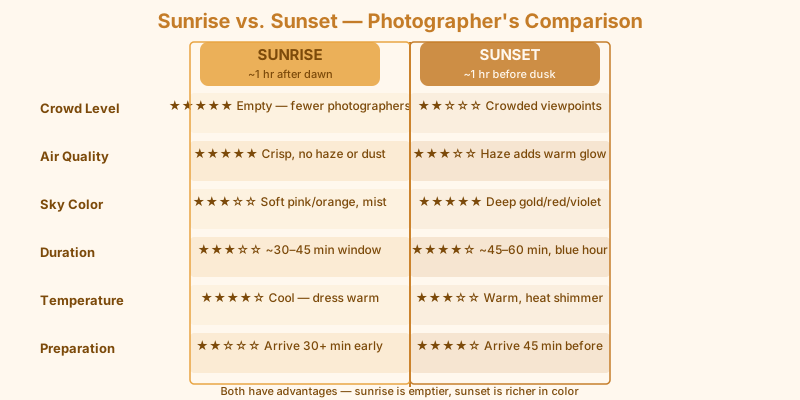
Neither is objectively better — they each have genuine advantages. But for most photographers, especially those shooting popular locations, sunrise wins the practical argument. Here's the full breakdown.
Before diving in, one important note: calculate the exact times for both windows before deciding which to shoot. The specific time difference on any given date in your city matters more than generalities.
Air Quality: Sunrise Has the Edge
During the night, atmospheric particles settle. Pollution, dust, pollen, and humidity all drop relative to their daytime peaks. When the sun rises, it's cutting through cleaner air than it will have access to at any other time of day.
By evening, the atmosphere carries all of that day's accumulated haze, exhaust, and particulate matter. In cities or in summer at humid latitudes, this is significant. The haze scatters light and creates warmth — which can be beautiful — but also reduces contrast and clarity.
For landscape photographers who want crisp, high-contrast images with sharp horizons and clear detail, morning almost always produces better optical conditions. For photographers who want soft, warm, intense color in the sky, evening haze can actually help.
In practical terms: a winter morning in a clean-air location produces the sharpest, most detailed golden hour images. A summer evening in a humid city produces the most intensely colored, warm-toned, atmospheric images.
Crowd Levels: Sunrise Wins Decisively
The most photographed golden hour locations — iconic city skylines, national park viewpoints, famous beaches — fill up at sunset. At sunrise, they're often empty.
This matters more than most photographers admit. At the right popular location at sunset, you may spend more energy managing your foreground around other people than actually shooting. Sunrise at the same location often gives you 20–30 minutes of completely solitary access before casual visitors start arriving.
If you've ever wanted to shoot a famous location without other people in the frame, sunrise is when you do it. This is particularly true for Golden Gate Bridge viewpoints, Griffith Observatory, Brooklyn Bridge Park, and similar urban icons.
The tradeoff is obvious: you have to be up before dawn. For a 6 AM sunrise in autumn, that means setting your alarm for 5 AM or earlier. Many photographers find this effort worthwhile for even one or two sessions at key locations. Use the calculator to confirm what time you need to arrive.
Sky Color: Sunset Tends More Dramatic
The sky before sunset and after often produces more vivid colors than the sky after sunrise and before. Two reasons:
First, evening haze scatters warm light more intensely. The sky often goes through orange, pink, and purple phases in the 20–30 minutes after the sun dips below the horizon that morning rarely matches.
Second, the weather dynamics differ. In many regions, afternoon heating builds cumulus clouds that then catch and reflect sunset light. Morning skies tend to be cleaner but less visually dynamic from a sky-color standpoint.
The afterglow — the intense pink and orange flush that can appear 10–20 minutes after sunset — happens at sunrise too (as a pre-glow just before the sun clears the horizon), but sunset afterglows tend to be more saturated and longer-lasting in most climates.
If you're primarily shooting the sky itself — clouds, gradients, color — evening is typically more reliably dramatic.
Duration: Varies by Season and Latitude
At any given location, the morning and evening golden hour windows are approximately the same length, but the comparison isn't exactly equal because the sun's rate of rise differs slightly from its rate of set.
At mid-latitudes in summer, the sun rises at a slightly steeper angle (faster) in the morning and sets at a slightly shallower angle (slower) in the evening. This means evening golden hour can run 5–15 minutes longer than morning golden hour on the same day.
In winter, the effect reverses or equalizes depending on latitude.
The difference is small enough that it shouldn't be the deciding factor — but if you're planning a shoot where you need maximum time, check the actual times for both windows for your specific date using the calculator rather than assuming they're identical.
Preparation: Sunset Is Easier to Plan
Showing up for sunset is simply logistically easier than waking up for sunrise. You can scout the location during the day, check weather conditions as they develop, and have more time to prepare equipment and make travel arrangements.
For sunrise, you're committing to the shoot the night before based on a forecast that may change by morning. You can't scout the exact lighting because the light condition you're planning for doesn't exist yet.
Professional photographers generally prefer sunset for client work and commercial shoots because the logistics are simpler and the risk of logistical problems is lower. They choose sunrise for personal projects and when an empty location is a priority.
Shooting Both: The Two-Session Day
In summer at northern latitudes, sunrise and sunset are separated by 15+ hours. You can physically shoot both in a single day, though most photographers would find this exhausting for the results it produces.
A more practical version: scout the location during an evening golden hour session, then return at sunrise to shoot it clean and empty. Or shoot the evening golden hour for the sky drama, then the morning golden hour for the empty location and clean air.
The two windows complement each other rather than compete. Plan your year so that specific locations get shot in their ideal condition — some work better at sunrise, some at sunset — rather than defaulting to one window for everything.
Quick Reference
Choose sunrise when: you need the location empty, you're shooting at a famous spot, you want clean air and high contrast, you're doing long-exposure work where people would blur.
Choose sunset when: you want dramatic sky color, you're shooting portraits (more flattering warm tones, easier to manage logistics), you're working with clients who aren't willing to rise before dawn, you're doing atmospheric or moody landscape work.
Check both times before deciding: on any specific date, either window may be more favorable depending on weather forecasts, your available schedule, and the specific direction your subject faces relative to the sun. Calculate both golden hour windows and pick based on actual conditions.